How to get a forklift operator certification online? The answer starts with one important distinction: online training usually covers knowledge, not complete operator qualification. A credible course should explain stability triangles, load capacity, pre-shift inspections, pedestrian awareness, and safe travel practices. It should also include short quizzes, clear completion records, and access to an instructor. Avoid providers promising instant certification without practical evaluation.
Dr. E. Scott Geller, a respected safety psychologist and workplace-safety consultant, often says, “People do what they do because of what happens to them when they do it.” That idea matters around forklifts. A certificate alone cannot replace careful habits beside a loading dock, narrow warehouse aisle, or busy pallet area. The best online programs connect lessons with real workplace behavior. They encourage operators to stop when visibility disappears, check damaged pallets, and report unsafe conditions.
After the online portion, an employer or qualified evaluator generally needs to assess practical driving ability. Requirements may differ by country, state, industry, and equipment type. In the United States, employers should compare the course with applicable OSHA requirements and their own workplace procedures. Do not assume every digital badge equals legal authorization. That assumption can fail.
A reliable path includes three checks: provider credibility, course completeness, and hands-on assessment. Keep the training record. Review it before operating unfamiliar equipment. The process may feel slower than clicking through a short course. It is safer, and more defensible.
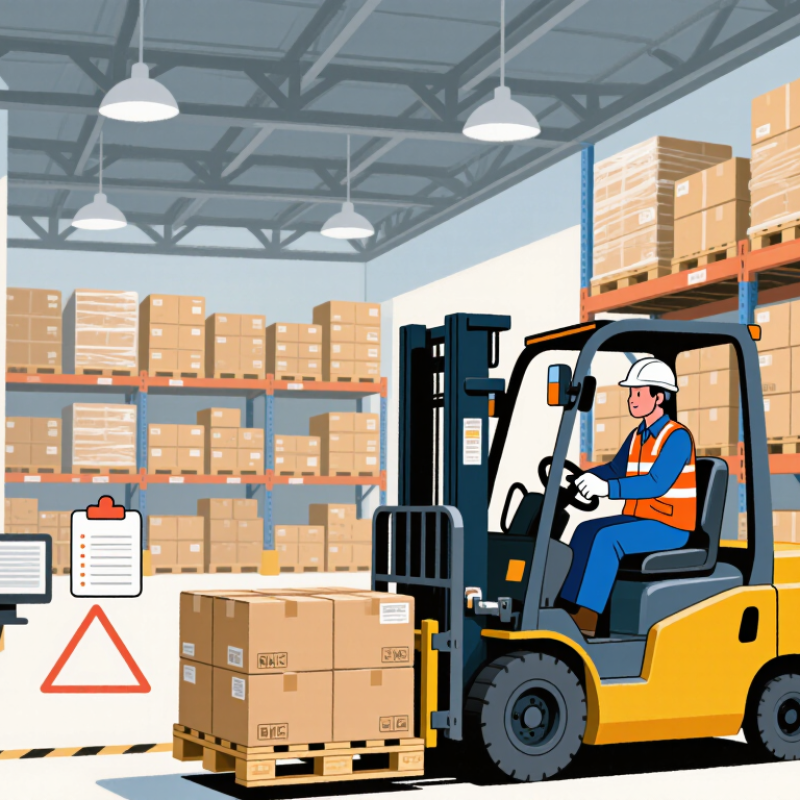
A forklift operator certification is evidence that a worker completed approved training and demonstrated safe operating skills. It is not just a video. A proper program covers stability, load limits, inspections, pedestrian awareness, battery or fuel hazards, and workplace procedures. Online lessons can explain these topics through quizzes, diagrams, and realistic hazard scenarios. However, “certified” may mean different things by location, employer, and forklift type. Check current local requirements before enrolling.
The strongest online route combines digital theory with a practical evaluation. After studying remotely, a qualified trainer should observe the operator on an actual or comparable forklift. The assessment may include a pre-use inspection, controlled turns, reversing, stacking, and parking with forks lowered. Picture a narrow aisle, a cracked pallet, and someone stepping behind the machine. These details test judgment, not memorization. Training matters because small mistakes can cause dropped loads, damaged stock, or serious injuries. That matters. A certificate provides documented evidence, but it does not replace daily attention.
Choose a course that identifies the instructor, explains its assessment process, records completion, and provides clear renewal guidance. Keep the certificate and evaluation records accessible. Employers should also provide site-specific orientation, because online training cannot know every ramp, blind corner, or floor condition. It is easy to feel confident after passing a quiz. That confidence needs checking. A careful operator still pauses, looks around, and asks questions when a load feels unstable.
A practical overview of online forklift training, required hands-on evaluation, certification responsibilities, and refresher requirements under the U.S. federal workplace-safety framework.
| Certification Dimension | What It Means | Online Training Role | Key Requirement or Evidence |
|---|---|---|---|
| Certification Status | Forklift certification confirms that an operator has completed required instruction, practical training, and an evaluation for the equipment and workplace conditions involved. | An online course may provide the formal-instruction portion, including safety rules, operating procedures, and hazard awareness. | Online course completion alone does not replace practical training and an in-person performance evaluation. |
| Who Provides Certification | The employer is responsible for ensuring that each operator is trained, evaluated, and authorized to operate the assigned powered industrial truck. | The employer may use an online provider for classroom-style instruction, subject to workplace training requirements. | The employer must certify that the operator has been trained and evaluated as required. |
| Formal Instruction | Formal instruction covers subjects such as operating controls, load handling, stability, inspections, pedestrian safety, refueling or battery charging, and workplace hazards. | Online lessons, videos, quizzes, and knowledge checks can be used to deliver this theoretical content. | Training should address the specific truck type and the conditions present at the operator’s workplace. |
| Hands-On Practice | The operator must practice safely using the powered industrial truck and perform relevant operating tasks under qualified supervision. | Online training can explain the tasks but generally cannot demonstrate the operator’s physical ability to control the truck safely. | Practice should occur in a safe area and reflect actual workplace routes, loads, surfaces, visibility, and traffic conditions. |
| Performance Evaluation | An evaluator must observe the operator’s performance and determine whether the operator can safely operate the truck. | A digital quiz may measure knowledge, but it is not a substitute for an observed driving evaluation. | The evaluation must be completed before the operator is authorized to operate independently. |
| Truck Type | Training must be appropriate for the type of powered industrial truck being operated, such as a sit-down counterbalanced truck, reach truck, or powered pallet truck. | Online content should identify the equipment category and explain its controls, stability characteristics, and operating limits. | Completion on one truck type does not automatically demonstrate competence on every other truck type. |
| Workplace-Specific Hazards | Operators must understand local hazards such as narrow aisles, dock edges, ramps, overhead obstructions, pedestrians, uneven floors, and changing loads. | Online modules can introduce common hazards, while the employer must explain site-specific conditions. | Site-specific instruction and practical evaluation are required when workplace conditions affect safe operation. |
| Certification Record | The employer must maintain documentation showing that the operator completed the required training and evaluation. | An online completion record can document the formal instruction portion of the process. | Records should identify the operator, training dates, evaluation date, and the identity of the trainer or evaluator. |
| Evaluation Frequency | Each operator’s performance must be evaluated at least once every three years. | Online refresher lessons may support continuing education but do not replace the required performance evaluation. | The three-year interval is a maximum evaluation interval under the federal standard, not a guarantee that retraining is unnecessary. |
| Refresher Training Triggers | Refresher training is required after unsafe operation, an accident or near miss, a failed evaluation, assignment to a different truck type, or a workplace condition that could affect safe operation. | Online instruction may address knowledge gaps before or alongside additional hands-on training. | The employer must determine when refresher training is necessary and document the corrective training. |
| Why It Matters | Proper certification helps reduce struck-by incidents, tip-overs, falling-load events, property damage, and unauthorized operation. | Online learning improves access and consistency for the knowledge component of training. | A complete program combines online instruction, workplace-specific training, supervised practice, evaluation, and documented employer authorization. |
It should describe stability, load capacity, inspections, pedestrian awareness, and safe parking. Clear lessons matter.
No. Online lessons provide formal instruction, but they cannot prove safe equipment handling. Practical evaluation remains necessary.
A qualified evaluator should observe steering, lifting, turning, stopping, parking, and pedestrian awareness. Real workplace conditions matter.
It may occur at your workplace or another approved location. Confirm local and employer requirements before enrolling.
Records should include your name, completion date, course topics, evaluator details, equipment type, and renewal guidance. Keep copies.
Not usually. It may show course completion, but it does not prove safe performance. That difference matters.
The course should match your equipment, such as sit-down counterbalance or narrow-aisle trucks. Different machines create different risks.
Refresher training may be needed after an accident, near miss, unsafe operation, workplace change, or different equipment.
Operators should receive a performance evaluation at least every three years. Earlier review may be wiser after workplace changes.
Be cautious about instant certificates, missing identity checks, unclear instructors, no practical assessment, vague refunds, and exaggerated safety claims. Fast is not complete.
How to get a forklift operator certification online? Start by understanding that certification confirms an operator has learned essential safety principles, equipment controls, workplace awareness, and safe operating procedures. Choose a legitimate online forklift training program that clearly explains its curriculum, includes a knowledge assessment, provides qualified instruction, and follows recognized workplace safety expectations. Avoid programs that promise certification without testing or practical evaluation.
After completing the online lessons and passing the knowledge assessment, arrange hands-on training with a qualified evaluator. This practical session allows you to demonstrate safe inspections, starting and stopping, steering, load handling, parking, and operating in realistic conditions. Once both parts are successfully completed, you can receive documentation of your certification. Maintain it by following workplace procedures, reporting unsafe conditions, and participating in refresher training when required or when your skills need reinforcement. Regular renewal and evaluation help ensure that your knowledge and operating abilities remain current.

 Plautz Excavator