Hydraulic systems power excavators, presses, agricultural equipment, and industrial production lines. In 2026, leak prevention is both an operational priority and an environmental responsibility. A small hose failure can release oil onto concrete, soil, or stormwater drains. The first warning may be a dark stain beneath a parked machine. Sometimes, it is only a thin oily sheen after rainfall.
Why are hydraulic leaks dangerous for environment compliance? Escaped fluid can contaminate soil and water, trigger costly cleanup, and weaken an organization’s environmental controls. Risks increase when inspections are irregular, spill kits are incomplete, or workers treat minor drips as harmless. Hydraulic oil can also create slip hazards and damage nearby vegetation. The consequences depend on fluid type, quantity, location, and response speed.
Effective prevention combines manufacturer guidance, trained inspections, documented maintenance, and practical site controls. Technicians should examine hose fittings, seals, cylinders, reservoirs, and quick couplers for abrasion or dampness. Drip trays and absorbent materials should be placed near vulnerable equipment. Used absorbents require controlled handling and proper disposal. Records should include inspection dates, leak locations, corrective actions, and follow-up checks. This evidence supports reliable internal reviews and communication with environmental professionals. However, no checklist is perfect. A newly replaced hose may fail early, or a hidden seal may escape detection. That uncertainty deserves honest review. Strong programs learn from near misses, improve inspection frequency, and verify repairs before equipment returns to service. Small details matter.
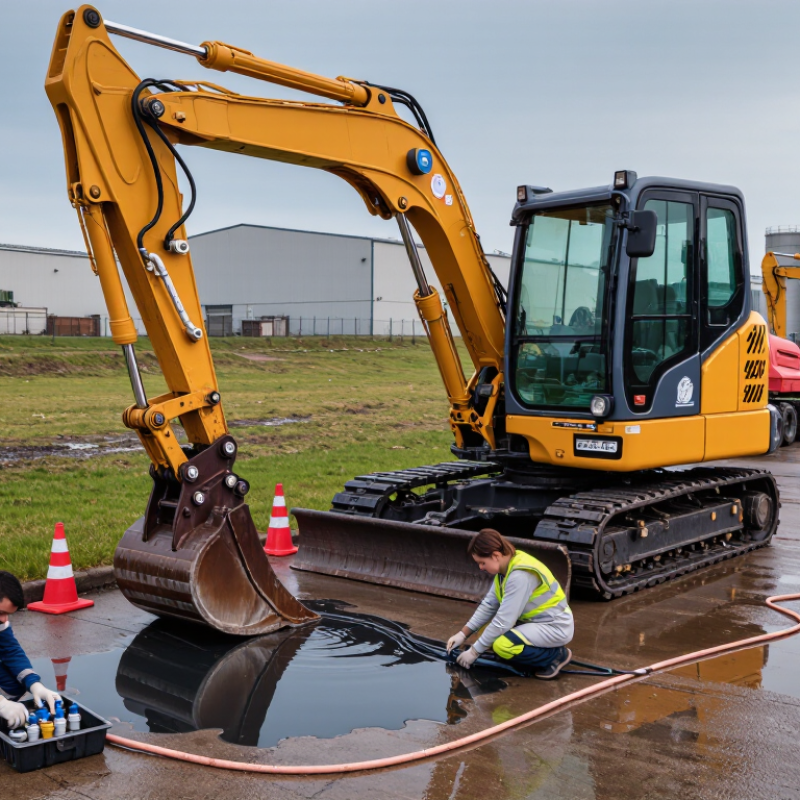
Hydraulic leaks usually begin with damaged hoses, loose fittings, worn seals, or excessive pressure. Heat and vibration accelerate these failures. Contaminated fluid also scratches valves and damages pumps, creating more leakage points. During field inspections, technicians often find a small wet mark before noticing major equipment loss. That mark matters.
The U.S. Environmental Protection Agency states that one gallon of oil can contaminate up to one million gallons of freshwater. Hydraulic fluid can also reduce oxygen exchange and harm aquatic organisms. Some formulations remain in soil for long periods, especially near drains or unsealed ground.
Tips:
Inspect hoses before every shift. Check abrasion, swelling, and cracked covers. Tighten fittings carefully, not blindly. Use drip trays beneath pumps and cylinders. Record fluid levels and unexplained losses. The ISO 4406 cleanliness code helps teams monitor particles that can trigger component wear. The European Chemicals Agency identifies many petroleum-based fluids as hazardous to aquatic life, with long-lasting effects. Still, “biodegradable” fluid is not automatically harmless. It may move quickly through soil. That point is easy to overlook.
Prevention needs more than replacing a failed hose. Set pressure relief valves correctly and protect lines from sharp edges. Store replacement seals away from heat and sunlight. Keep spill kits near operating equipment, not inside a distant warehouse. A clean floor can mislead us. Hidden leaks may travel beneath concrete or into drainage systems. Maintenance records should include leak location, fluid type, repair time, and estimated volume. Estimates are imperfect, but ignoring them is worse.
Hydraulic leaks rarely begin as dramatic sprays. A damp fitting, darkened hose cover, or thin oil trail may be the first warning. In 2026, inspection teams should trace the fluid uphill, not simply wipe the visible area. Clean the suspected zone, run the system at safe pressure, and watch each connection with a light. Shut down before touching pressurized components. Pressure can remain trapped. Record the location, temperature, operating cycle, and fluid appearance. These details help separate a loose fitting from hose fatigue, seal failure, reservoir damage, or valve wear. Smell and color can change, so visual judgment alone is weak.
Source identification should include the path below the machine. Oil can travel along frames and drip far from the original failure. Place clean absorbent pads beneath joints, then compare fresh spots after a controlled test. A small mirror or camera helps inspect crowded spaces without reaching into moving equipment. Do not use bare hands to find a pinhole leak. Use approved detection methods and trained personnel. I have seen minor seepage dismissed as harmless, only to find a damaged hose after repeated cycling. That assumption needs challenging.
Assess potential damage by estimating volume, spread, and exposure time. Check soil, drains, water channels, flooring, electrical parts, brakes, and nearby heat sources. Note whether the fluid entered porous concrete or migrated beyond containment. Photograph affected areas and preserve maintenance records. A leak near a drain deserves faster escalation than the same volume on sealed flooring. Consult the safety data sheet and site procedures before cleanup or disposal. If the source remains uncertain, stop repeated testing and request a qualified hydraulic technician. Guessing saves minutes, sometimes badly.
Identify leak sources and assess potential damage using a practical 5×5 screening model. Each risk score is calculated as likelihood multiplied by environmental consequence, with both factors rated from 1 to 5.
2026 How to Prevent Hydraulic Leaks Environmental Risks
Safer hydraulic fluids begin with verified environmental performance, not the word “biodegradable.” ISO 15380 covers environmentally acceptable hydraulic fluids, including requirements for biodegradability, toxicity, and technical performance. The European Environment Agency’s 2024 Europe’s State of Water report found that only 37% of surface waters reached good ecological status. A small leak can add pressure to already stressed ecosystems.
Fluid selection must match seals, hoses, pumps, and coatings. Check viscosity across operating temperatures, fire resistance, oxidation stability, and water separation. Review compatibility data against elastomers and plastics. ASTM D471 testing can show how rubber changes after fluid exposure. A workshop trial should include heat, pressure, and aging conditions. Shortcuts fail here. A fluid can protect water but damage a seal. That creates another leak.
Tips: Keep sealed samples of the proposed fluid. Soak critical seal materials before conversion. Inspect fittings after the first 50 operating hours. Record seepage, temperature, and filter condition. Replace damaged hoses, not only loose fittings. Use drip trays during maintenance. The U.S. EPA’s 2023 National Biennial RCRA Hazardous Waste Report recorded more than 35 million tons of hazardous waste managed in 2021. This figure is not a hydraulic-leak estimate, but it shows why prevention matters. One practical weakness remains: compatibility charts are rarely enough without field validation.
2026 How to Prevent Hydraulic Leaks Environmental Risks
Apply Preventive Maintenance and Early Detection Methods
Hydraulic leak prevention begins with a maintenance schedule built around operating conditions. Inspect hoses, seals, fittings, and cylinders at fixed intervals. Look for oil mist, softened surfaces, cracked covers, and fresh stains beneath equipment. A clean drip tray makes small leaks easier to notice. Wipe suspected areas, then recheck them after several operating cycles. This simple habit often reveals seepage before a visible puddle forms.
Technicians should record pressure readings, fluid levels, hose age, and unusual machine noise. Compare each result with previous records, not only with factory limits. A gradual pressure drop may indicate internal wear or a loose connection. Portable leak detectors and temperature checks can support visual inspections. However, instruments need calibration. Poor data can create false confidence. Tighten fittings carefully, because excessive force may damage threads or seals.
Replace worn components before failure becomes urgent. Store replacement hoses away from sunlight, heat, and sharp edges. During servicing, use clean tools and prevent dirt from entering open lines. Contain every spill with suitable absorbent materials, and dispose of contaminated waste through approved procedures. No checklist catches everything. Workers should report minor seepage without fear of blame, since a small leak can spread across soil, drains, and nearby water.
| Risk Area | Typical Leak Source | Early Detection Method | Recommended Inspection Frequency | Action Trigger | Environmental Risk | Preventive Maintenance Measure | Response Priority |
|---|---|---|---|---|---|---|---|
| Hose Assemblies | Abrasion, bending below the minimum radius, cracked outer cover, damaged fittings, or aging | Visual inspection for wetness, bulges, exposed reinforcement, rubbing marks, and localized surface damage | Before each shift and after maintenance or unusual pressure events | Any visible seepage, damaged cover, exposed wire, or hose movement outside its designed range | Fluid can reach soil, drains, surface water, or groundwater and create slip hazards | Route hoses away from sharp edges and heat; secure them against vibration; replace damaged assemblies immediately | High |
| Fittings and Connections | Loose connections, damaged sealing surfaces, incorrect torque, or vibration-induced movement | Wipe-clean inspection followed by operation at normal pressure; check for fresh oil film or droplets | Weekly and whenever a connection has been disturbed | Fresh leakage, repeated retightening, damaged threads, or visible seal failure | Small recurring leaks can accumulate into significant releases and contaminate equipment surfaces | Use the specified fitting type and torque procedure; replace damaged seals; never tighten pressurized fittings | Medium–High |
| Cylinder Rod Seals | Seal wear, contaminated fluid, rod corrosion, misalignment, or side loading | Inspect the rod for an oil ring, dripping during cycling, slower movement, or unexplained fluid-level loss | Daily for critical equipment; otherwise weekly during operation | Oil film becomes a drip, leakage increases during cycling, or actuator performance changes | Leakage may spread over machine surfaces and enter drainage systems during outdoor operation | Keep rods clean, protect them from impact and corrosion, correct alignment problems, and replace worn seals | Medium–High |
| Pumps and Motors | Shaft-seal wear, damaged housing seals, excessive vibration, cavitation, or misalignment | Monitor noise, vibration, temperature, pressure stability, and fluid level; inspect around the shaft and housing | Daily operator checks and monthly condition review | New vibration or noise, abnormal temperature, unstable pressure, or visible shaft-area leakage | A major seal failure can release fluid rapidly and may cause secondary equipment damage | Maintain correct alignment, prevent cavitation, verify adequate fluid level, and investigate abnormal operating conditions | High |
| Valves and Manifolds | Spool or poppet seal wear, cracked bodies, contaminated fluid, or improper installation | Check valve bodies and manifold joints for wetness; compare pressure and actuator response with normal conditions | Weekly and during planned shutdowns | External seepage, pressure decay, sluggish movement, or repeated relief-valve operation | Persistent seepage can contaminate floors, soil, and nearby stormwater pathways | Keep fluid clean, use suitable filtration, inspect seals during servicing, and verify correct installation | Medium |
| Reservoir and Breather | Corrosion, cracked welds, loose plugs, overfilling, blocked breathers, or damaged level indicators | Inspect the tank, drain points, sight gauge, breather, and surrounding floor for wetness or overflow marks | Daily level check and monthly external inspection | Unexpected level change, visible corrosion, damaged breather, or fluid above the marked maximum level | Overflow or tank failure can produce a large release and spread contamination over a wide area | Maintain the correct fill level, keep breathers clean, control corrosion, and inspect welds and drain plugs | High |
| Filtration and Fluid Condition | Blocked filters, degraded fluid, water ingress, particle contamination, or incorrect fluid level | Use filter indicators, fluid sampling, visual checks for cloudiness, and trend pressure or temperature readings | Check indicators daily; sample fluid at a risk-based interval | Filter restriction indicator reaches its service zone, fluid becomes cloudy, or particle and water levels rise | Contaminated fluid accelerates seal and component wear, increasing the probability of future leaks | Change filters according to condition, keep reservoirs sealed, use clean transfer equipment, and correct contamination sources | Medium |
| Pressure and Temperature | Overpressure, blocked return flow, incorrectly set relief valve, excessive heat, or pressure spikes | Trend gauge readings, use temperature sensors where appropriate, and compare results with approved operating limits | Operator check each shift and documented trend review monthly | Repeated pressure spikes, operation outside approved limits, or abnormal temperature trend | Excessive pressure can turn a minor defect into a high-rate leak or hose rupture | Verify relief settings, remove flow restrictions, control heat, and investigate abnormal trends before continued operation | High |
| Spill Containment | Missing or damaged drip trays, inadequate bunding, blocked drains, or poor housekeeping | Inspect containment capacity, drain covers, absorbent materials, and visible staining around equipment | Weekly and after every spill or severe weather event | Containment is damaged, full, bypassed, or unable to prevent flow toward drains or soil | Uncontrolled migration can carry hydraulic fluid into stormwater systems and surface water | Maintain secondary containment, protect drains, keep spill kits accessible, and remove collected fluid promptly | High |
| Leak Response | Delayed reporting, inadequate isolation, incorrect cleanup, or disposal of used absorbents as ordinary waste | Use inspection logs, fluid-use reconciliation, alarm records, and documented spill reports | Review after every event and during monthly safety meetings | Any release reaches a drain, soil, water body, or exceeds the site’s reporting threshold | Improper response can enlarge the affected area and create regulatory, safety, and waste-management risks | Stop the source safely, isolate drains, contain the fluid, collect contaminated materials, and follow applicable reporting rules | Critical |
How to Prevent Hydraulic Leaks Environmental Risks
A hydraulic leak needs immediate control, not panic. Stop the equipment if it is safe. Isolate the pressure source and keep people away from moving parts. Place barriers around the affected area. Protect nearby drains, soil, and waterways with absorbent socks or temporary covers. Use suitable personal protective equipment, including gloves and eye protection. A small puddle can spread quickly across smooth concrete.
The response team should identify the fluid, estimate the release volume, and contact the site supervisor. Follow the facility’s spill response plan and local reporting requirements. Never wash hydraulic fluid into a drain. Collect contaminated absorbents, soil, and damaged parts in labeled, sealed containers. Keep waste records, photographs, time logs, and disposal documents. These details support regulatory compliance and make later reviews more reliable. Cleanup is incomplete when a thin sheen remains under machinery.
Inspections prevent repeated failures. Check hoses for abrasion, fittings for looseness, and cylinders for damaged seals. Review maintenance intervals after every significant leak. Our first response plan was too general; it did not define who would notify authorities. That weakness mattered. Plans should name responsible roles, emergency contacts, storage locations, and training expectations. Test the procedure with a short drill. Improve what feels unclear. Safety data sheets and current local regulations should guide fluid handling, reporting, and waste disposal.
Damaged hoses, loose fittings, worn seals, and excessive pressure are common causes. Heat and vibration accelerate failure. Contaminated fluid can damage valves and pumps.
Check for oil mist, wet marks, softened hose surfaces, cracked covers, and fresh stains. Unusual machine noise may also signal internal wear. Small leaks spread.
Inspect hoses, seals, fittings, and cylinders at fixed intervals. Check hoses before every shift when operating conditions are harsh. Schedules should reflect heat, vibration, and workload.
Wipe the area clean, then inspect it after several operating cycles. A clean drip tray can reveal new seepage. Temperature checks and calibrated leak detectors may help.
Escaped fluid can enter soil, drains, and nearby waterways. One gallon of oil may contaminate up to one million gallons of freshwater. Aquatic organisms may suffer from reduced oxygen exchange.
No. Biodegradable fluid is not automatically harmless. It may move quickly through soil and still affect aquatic life. That detail is easy to overlook.
Set pressure relief valves correctly and protect lines from sharp edges. Store spare hoses and seals away from heat and sunlight. Use clean tools during servicing.
Record the location, fluid type, repair time, pressure readings, and estimated volume. Estimates are imperfect. Ignoring them is worse.
Keep absorbent materials and spill kits beside operating equipment. A distant storage room wastes valuable minutes. Contain spills promptly and follow approved disposal procedures.
Small seepage can spread beneath concrete or enter drainage systems. Workers need a blame-free reporting culture. No checklist catches everything.
Hydraulic leaks can cause serious environmental harm by releasing oil or fluid into soil, drains, and waterways, potentially affecting plants, wildlife, and nearby communities. Why are hydraulic leaks dangerous for environment compliance? Beyond causing contamination, leaks may trigger reporting duties, cleanup obligations, operational disruptions, and financial penalties. Effective prevention begins with identifying common leak sources, such as damaged hoses, loose fittings, worn seals, excessive pressure, and incompatible components, then assessing the possible spread and severity of a release.
Organizations can reduce risk by selecting safer, less hazardous hydraulic fluids and ensuring that hoses, seals, valves, and connectors are chemically and mechanically compatible. A preventive maintenance program should include routine inspections, pressure checks, fluid monitoring, component replacement, and early detection tools for abnormal loss or contamination. When a spill occurs, isolate the source, protect drains, contain the fluid, collect contaminated materials safely, document the incident, and follow applicable environmental reporting and disposal requirements. These measures support reliable equipment performance and stronger environmental compliance.
Plautz Excavator